

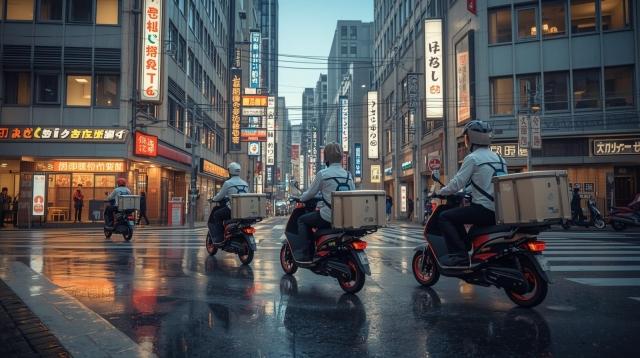
Japan Q-Commerce Market Overview
Market Size in 2024: USD 2,855.65 Million
Market Forecast in 2033: USD 14,990.64 Million
Market Growth Rate 2025-2033: 20.23%
According to IMARC Group's latest research publication, "Japan Q-Commerce Market Size, Share, Trends and Forecast by Product Type, Platform, and Region, 2025-2033", The Japan q-commerce market size reached USD 2,855.65 Million in 2024. Looking forward, IMARC Group expects the market to reach USD 14,990.64 Million by 2033, exhibiting a growth rate (CAGR) of 20.23% during 2025-2033.
Download a sample PDF of this report: https://www.imarcgroup.com/japan-q-commerce-market/requestsample
Growth Factors in the Japan Q-Commerce Market
- Increasing Smartphone Adoption and Digital Connectivity
Japan is a highly smartphone-using nation, giving the q-commerce business a good chance to take off in a country where consumers already have the habit of buying things online from a smartphone application. Consumers living in cities tend to not go to supermarkets and convenience stores to buy groceries. Ordering goods online, including by using applications, is common in major cities in Japan such as Tokyo and Osaka. This is due to a well-developed internet environment and high digital payment rate. The market for q-commerce is increasing steadily as more and more mobile-first consumers prefer mobile apps. Grocery retailers and delivery marketplaces have invested in easy-to-use apps and a simple checkout process. Instant ordering and quick delivery times make q-commerce a more convenient alternative to shopping at a customary retail grocery store.
- Growing Demand for Ultra-Fast and Convenient Deliveries
Today, speed and convenience are most important for consumers, especially Japanese, notably young consumers and working professionals. Japanese consumers expect fast delivery, ranging from 15-30 minutes in large urban areas. Busy lifestyles and lack of time increases the demand for q-commerce needed by the customer to fulfill last minute grocery needs such as when they fail to buy the same when going for dinner or even household needs. The aging population of the country favors home delivery of essentials. Retailers and transportation companies are investing in dark stores and micro-fulfillment facilities in key urban locations to ease faster order picking and delivery. Consumer demand for convenience and expedience is expected to drive the direction of the market in the future.
- Urbanization and Dense Population Centers
Japan's urban landscape and high population density make it a lucrative market for q-commerce. Tokyo, Yokohama, and Osaka have some of the highest local population densities throughout the world which helps to make delivery routes efficient and delivery times quick. The high consumer density in these geographies allows the platform to optimize last mile fulfillment costs and deliver in short time frames. This is mainly driven by urban densities where people live in small homes and apartments with less storage space and hence have a preference for smaller quantities. This purchasing behavior is another fit for the q-commerce model. Japanese cities have a well-developed transportation network that allows various delivery options to operate effectively. Japanese culture also has an inclination toward precision and punctuality that fits the model.
Key Trends in the Japan Q-Commerce Market
- Integration of AI and Advanced Logistics Innovations
In Japan, various q-commerce companies use AI across their platforms. AI systems predict demand when they analyze purchasing patterns, seasonal changes, and regional differences in real-time. This improves food waste management and optimizes delivery routes. To reduce delivery time, machine learning algorithms consider traffic, weather, and delivery priority for real-time delivery route optimization. Chatbots and virtual assistants can improve customer service. They achieve this through immediate responses and personalized recommendations. Advancements in logistics processes have enabled q-commerce companies to increase efficiency. These advancements like automated warehouses and machine learning inventory management systems allow companies to minimize human error and scale without sacrificing performance. AI technologies arrived. With them, companies found new methods that increase productivity, minimize operational expenses, improve customer experience, and satisfy customers through data-driven decision-making.
- Rise of Autonomous Delivery Solutions
Because Japan is one of the first countries to use autonomous delivery technologies in the q-commerce space, delivery robots and self-driving delivery vehicles are actively used in cities to alleviate labor shortages and issues with the high cost of last-mile delivery. Delivery robots keep a run on the pavement or on the road with limited or no human supervision, and deliver to customers' doorsteps. The application can potentially be used in densely populated urban areas where the roads are crowded and parking is limited. Testing programs in autonomous deliveries have been widely used by companies, some of which are already operational in certain areas. It is one of the projects where Japan intends to increase efficiency and meet demand with advanced technology. Autonomous delivery is expected to play a larger role in the future of q-commerce with regulations and technology improving.
- Growth of E-Pharmacy and Healthcare Quick Delivery
E-pharmacy is a fast growing part of the Japanese q-commerce market Consumers feel more at ease ordering pharmaceuticals, health supplements, and personal care products online They expect quick delivery. An aging population has also driven this trend, and home delivery is particularly attractive to Japanese consumers for prescription renewals and over-the-counter products. Q-commerce companies provide fast or ultra-fast home delivery of these healthcare products in collaboration with licensed pharmacies, allowing them to abide by regulations. Telehealth services and q-commerce services are increasingly integrated with each other. However, the fact that consumers can consult a healthcare professional and be prescribed medication potentially within hours offers real advantages in terms of accessibility and convenience, particularly for older or disabled consumers. This opens up new markets for q-commerce, beyond grocery and general retail markets.
- Strategic Partnerships Between Local Retailers and Delivery Platforms
The defining feature of q-commerce in Japan is collaboration between existing Japanese retailers and dedicated logistics streamers. Major Japanese supermarkets, convenience stores, and specialty retailers have contracted with technology-driven delivery logistics companies to augment existing customer offerings, rather than creating their own delivery infrastructure. The partnerships are generally between retailers and delivery platforms. Retailers let their partners access their suppliers, inventory-management systems and local expertise, while delivery platforms provide technology and fleets of workers. Some retailers have converted stores into dark stores for online orders only. Others cater for both in-store and online customers. These partnerships aid physical stores in keeping competitive in a more digital area and permit delivery platforms to grow their product range and accessibility fast. Partners often collaborate. These collaborations result in innovations, improved service levels, and access into new markets.
Japan Q-Commerce Industry Segmentation:
The report has segmented the market into the following categories:
Product Type Insights:
- Grocery
- Pharmacy
- Others
Platform Insights:
- App Based
- Web Based
Regional Insights:
- Kanto Region
- Kansai/Kinki Region
- Central/Chubu Region
- Kyushu-Okinawa Region
- Tohoku Region
- Chugoku Region
- Hokkaido Region
- Shikoku Region
Request a Customized Report for Deeper Insights: https://www.imarcgroup.com/request?type=report&id=33625&flag=E
Competitive Landscape:
The competitive landscape of the industry has also been examined along with the profiles of the key players.
Future Outlook
The future scenario of q-commerce in Japan appears to be extremely bright. Continuous technologies improve as they introduce 5G networks. They ease information's faster transmission and platforms communicate in real-time with warehouses and delivery personnel. This reduces the time of fulfillment and improves service quality. Logistics infrastructure matures, and consumer e-commerce awareness increases so suburban and rural areas will grow fastest. Increasing consumer awareness of environmental concerns will cause firms to adopt more green practices including electric vehicles, low-emission vehicles and green packaging solutions in Japan. Emerging technologies and business models such as drone delivery, robotic delivery and autonomous rovers are entering the last mile arena. Yet they are also facing issues including competition, margin compression, and the cost of investing in new technologies and infrastructure. Over time, regulations on autonomous delivery, data privacy, and food safety will be created, and Japanese q-commerce will set the global standard with a focus on innovation, an outstanding customer experience, and superior operational excellence, becoming the most advanced and advanced in the world in speed, efficiency, and the customer experience.
Research Methodology:
The report employs a comprehensive research methodology, combining primary and secondary data sources to validate findings. It includes market assessments, surveys, expert opinions, and data triangulation techniques to ensure accuracy and reliability.
Note: If you require specific details, data, or insights that are not currently included in the scope of this report, we are happy to accommodate your request. As part of our customization service, we will gather and provide the additional information you need, tailored to your specific requirements. Please let us know your exact needs, and we will ensure the report is updated accordingly to meet your expectations.
About Us:
IMARC Group is a global management consulting firm that helps the world's most ambitious changemakers to create a lasting impact. The company provide a comprehensive suite of market entry and expansion services. IMARC offerings include thorough market assessment, feasibility studies, company incorporation assistance, factory setup support, regulatory approvals and licensing navigation, branding, marketing and sales strategies, competitive landscape and benchmarking analyses, pricing and cost research, and procurement research.
Contact Us:
Street: 563-13 Kamien
Area: Iwata
Country: Tokyo, Japan
Postal Code: 4380111
Email: [email protected]